We don’t really want to make things better

Yesterday I wrote about the simple rules that underlie complex systems.

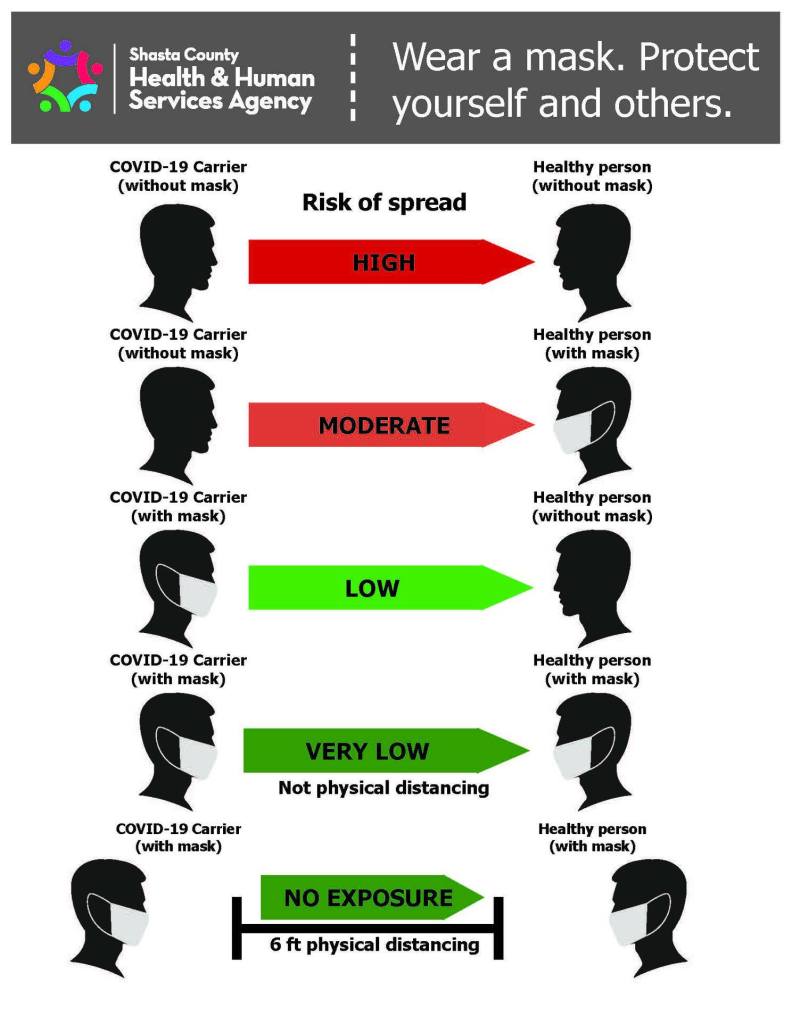
Below is a simple rule to defeat COVID-19. If everyone did this for 2 weeks, the pandemic would be over.

Two. Weeks.

There are similar complex problems in our organizations today that have a simple solution. And they persist because no one is willing to suffer a little bit now and make thing better forever thereafter.

We don’t really want to make things better.

What if it were simple?

I am currently reading Systems Thinking Made Simple, which convincingly demonstrates that simplicity underlies complexity. In fact, it drives it.

Therefore, when faced with a complex problem, an important approach to finding a solution is to discover the simplicity underneath. What are the simple rules driving your compliance problem today?

Similarly, when building a compliance program, which ought to be complex, remember that it must rest on simple rules. Identify those rules at the outset. Write them down. Display them for all to see. Make sure every element of your system obeys those rules. If everyone interacting with the system understands the simple rules, they will not be overwhelmed by the complexity that emerges.

On feeling heard

As many of us work from home, some companies worry about employee performance. Employers are asking “How can I keep my team engaged?”

According to a Salesforce Research report, one of the most powerful things a manager can do is to make sure her employees feel like their voice is being heard. Employees who feel their voice is being heard are 4.6X more likely to feel empowered to perform their best work.

So now more than ever, managers should solicit feedback from employees. Ask them how you are doing as a manager, what you could do better, what worries them, and what they need to do their job. And know that you don’t always need to have an answer for everything. Sometimes, psychological air is all that is needed. And if you want helpful feedback from them, make sure you are transparent about the current situation and your future plans.


Speaking of feedback, this blog is approaching its 700-post milestone. How am I doing? What could I do better? What would help you better navigate ethics & compliance issues at work? Please let me know in the comment section below. Thank you!

Check your odds

Good poker players fold their starting hand three to four times more often than bad players. They know to wait for better cards in a better position. While they wait, they observe and accumulate information about the other players.

Likewise, good ethics officers rarely provide answers without asking many questions of their own. They resist the temptation of appearing smart based on incomplete information. They deploy modesty and seek to understand all facets of a problem. They consider the facts and the people involved before offering advice.

Providing ethical advice is betting that our prediction of the future will manifest. Let’s make sure we are placing good bets.

What is your job?

Read each question below and take at least 30 seconds to truly contemplate the answer. Don’t rush. You’ll be done in 2 minutes.

  • What does your boss think your job is?
  • What do your direct reports think your job is?
  • What do your colleagues think your job is?
  • What does your family think your job is?

My guess is that none of the answers included:

  • Get a raise
  • Get a promotion
  • Get a better office
  • Get a company car

If you do your job, you might get those. But if you work to get those, you might not be doing your job.

Beware public shaming

In this podcast, Julia Marcus of Harvard Medical School tells us that shaming people who don’t wear masks or keep their distance will not help solve the pandemic.

She explains that there is a difference between public shaming and the more gentle peer pressure of using social norms. Social norms are the positive side of “everybody’s doing it”, making people feel safe to follow the herd (and unsafe to leave it).

Explaining a social norm to a person is a powerful form of nudge. It’s something that we can do in our organizations to create the right culture. For example, if we want to change the behavior of those who wait until the last day to complete their online ethics training, we can share the fact that 90% of their colleagues complete their training 1 week or more before the deadline. This is more likely to have a positive effect than publicly shaming them for completing their training on the last day (perhaps by publishing their names on the intranet).

There is another danger to public shaming: we risk creating a new, undesirable social norm. When people see others having fun at the beach or at a bar, partying without a mask, they might want to do the same. When employees see that many of their colleagues wait until the last minute to complete their training, they might think “why not”?

Public shaming not only feels wrong, it can also prove to be counterproductive.

Care not what others think

“I care not what others think of what I do, but I care very much about what I think of what I do. That is character!”

Theodore Roosevelt

Every leader is called to be an antiracist, today more than ever.

Taking a stand will expose us to attacks and criticism. We may damage a relationship with a relative, lose a friend, or be excluded at work.

Let us not care about it. Our character is at stake, and that of every nation on Earth.

Frequent and short

Some scientists believe that we should start using COVID-19 tests that are far less sensitive but fast and cheap. They argue that if the low cost and speed of the test allows us to screen a person every few days, we will be better off than screening that person only once each month with a more accurate test.

This idea reminded me of the value of short and frequent messages about the importance of ethics and compliance in an organization. With every message, a manager is inviting her team to ask a question or raise a concern. An annual ethics stand-down day, complete with speakers and videos and games, can certainly send a strong message. But these events will catch most employees on a day when they don’t have a concern to raise, and leave the others unsure about whether they should speak up. How serious can a company be about ethics if they only discuss it once a year?

In almost everything we do at work, every day, there is an opportunity to cheat, steal or lie. You know that, your employees know that. Make it easy for them to ask question and raise concerns. And do so every day.

WFH creates a safe space for reporters

With more people working from home, tips to government agencies have spiked. It feels safer to report wrongdoers when you don’t have to face them in person every day.

There is an opportunity here for ethics & compliance professionals. With the right type of outreach, we can get our colleagues to share their concerns with us and provide the help they need. Remember that most whistleblowers go to the press or the government only after they feel they have exhausted all avenues within their workplace.

Be visible on your internal social media channels (Slack, Teams, Yammer, etc.). Write in your company newsletter. Invite employees to a video call where you discuss the Code of Conduct, a recently updated policy, or the new risks your company is facing because of COVID-19. These types of activities will invite employees who have something on their mind to connect with you.

How to beat the two pandemics

Many people refer to COVID-19 and racism as “the two pandemics.”

With COVID-19, our job is to keep our distances, wash our hands, and wear a mask while we wait for a vaccine. For anyone trying to do the right thing, the task is fairly simple.

With racism, our job is much more complex. The steps to a cure are not as simple. But the first step for just about anyone appears to be education and learning. And today, at 7 PM UTC -4, we all have an opportunity to learn from National Book Award winner and New York Times bestselling author Ibram X. Kendi, as he discusses his book “How to Be an Antiracist.” For anyone trying to do the right thing, today’s task is fairly simple: register for the free event and listen with an open mind.

We can’t just wish these pandemics away. But we can wear a mask. And we can learn how to fight racism. That’s ethical leadership.