COVID and corruption

Journalists and lawmakers are starting to investigate how certain public contracts related to COVID-19 have been awarded.

We should expect many more investigations of this kind all over the world. When billions of dollars converge on one event, whether it be the Olympics or a pandemic, there is bound to be corruption, self-dealing, and other improprieties.

With the Olympics or the World Cup, we understand the importance of augmenting corruption controls years before the event takes place. The minute the host city is announced, we can start reinforcing the compliance program and the ethical culture of our local operations before the first bid is due. With COVID-19, governments have not had time to do this. They’ve all had to rely on ordinary controls.

But here’s one thing we can prepare for: the reopening. Once the machine revs up again, and millions of customers are urging millions of companies to release goods that depend on millions of suppliers, the pressure will be on. And with pressure comes not only wrongdoing but a diminished capacity to fight wrongdoing.

On the other side of the reopening coin is the need to “ease” compliance. My friend Richard Bistrong wrote an excellent piece about it on the FCPA Blog, which I recommend you read with this one as an interesting balancing act.
We don’t really want to make things better

Yesterday I wrote about the simple rules that underlie complex systems.

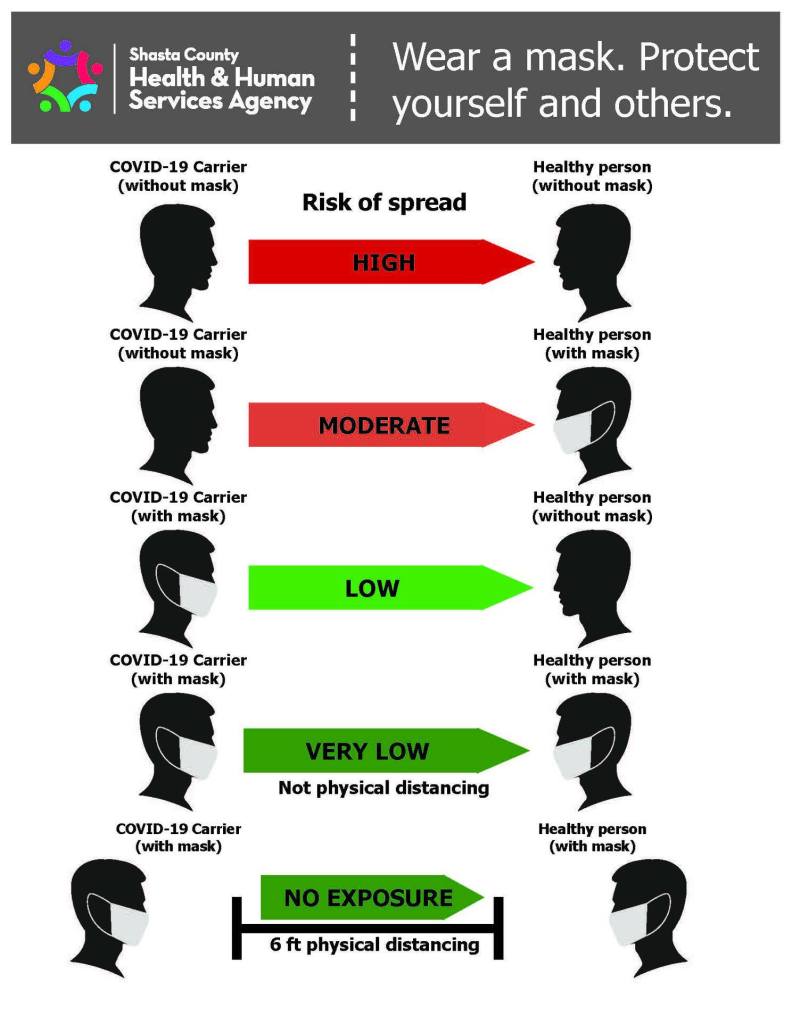
Below is a simple rule to defeat COVID-19. If everyone did this for 2 weeks, the pandemic would be over.

Two. Weeks.

There are similar complex problems in our organizations today that have a simple solution. And they persist because no one is willing to suffer a little bit now and make thing better forever thereafter.

We don’t really want to make things better.

Beware public shaming

In this podcast, Julia Marcus of Harvard Medical School tells us that shaming people who don’t wear masks or keep their distance will not help solve the pandemic.

She explains that there is a difference between public shaming and the more gentle peer pressure of using social norms. Social norms are the positive side of “everybody’s doing it”, making people feel safe to follow the herd (and unsafe to leave it).

Explaining a social norm to a person is a powerful form of nudge. It’s something that we can do in our organizations to create the right culture. For example, if we want to change the behavior of those who wait until the last day to complete their online ethics training, we can share the fact that 90% of their colleagues complete their training 1 week or more before the deadline. This is more likely to have a positive effect than publicly shaming them for completing their training on the last day (perhaps by publishing their names on the intranet).

There is another danger to public shaming: we risk creating a new, undesirable social norm. When people see others having fun at the beach or at a bar, partying without a mask, they might want to do the same. When employees see that many of their colleagues wait until the last minute to complete their training, they might think “why not”?

Public shaming not only feels wrong, it can also prove to be counterproductive.

Frequent and short

Some scientists believe that we should start using COVID-19 tests that are far less sensitive but fast and cheap. They argue that if the low cost and speed of the test allows us to screen a person every few days, we will be better off than screening that person only once each month with a more accurate test.

This idea reminded me of the value of short and frequent messages about the importance of ethics and compliance in an organization. With every message, a manager is inviting her team to ask a question or raise a concern. An annual ethics stand-down day, complete with speakers and videos and games, can certainly send a strong message. But these events will catch most employees on a day when they don’t have a concern to raise, and leave the others unsure about whether they should speak up. How serious can a company be about ethics if they only discuss it once a year?

In almost everything we do at work, every day, there is an opportunity to cheat, steal or lie. You know that, your employees know that. Make it easy for them to ask question and raise concerns. And do so every day.

WFH creates a safe space for reporters

With more people working from home, tips to government agencies have spiked. It feels safer to report wrongdoers when you don’t have to face them in person every day.

There is an opportunity here for ethics & compliance professionals. With the right type of outreach, we can get our colleagues to share their concerns with us and provide the help they need. Remember that most whistleblowers go to the press or the government only after they feel they have exhausted all avenues within their workplace.

Be visible on your internal social media channels (Slack, Teams, Yammer, etc.). Write in your company newsletter. Invite employees to a video call where you discuss the Code of Conduct, a recently updated policy, or the new risks your company is facing because of COVID-19. These types of activities will invite employees who have something on their mind to connect with you.

How to beat the two pandemics

Many people refer to COVID-19 and racism as “the two pandemics.”

With COVID-19, our job is to keep our distances, wash our hands, and wear a mask while we wait for a vaccine. For anyone trying to do the right thing, the task is fairly simple.

With racism, our job is much more complex. The steps to a cure are not as simple. But the first step for just about anyone appears to be education and learning. And today, at 7 PM UTC -4, we all have an opportunity to learn from National Book Award winner and New York Times bestselling author Ibram X. Kendi, as he discusses his book “How to Be an Antiracist.” For anyone trying to do the right thing, today’s task is fairly simple: register for the free event and listen with an open mind.

We can’t just wish these pandemics away. But we can wear a mask. And we can learn how to fight racism. That’s ethical leadership.

Ease the stress

As the pandemic wears on in the United States (thanks in large part to people who selfishly refuse to wear masks), workers are exposed to ongoing stress.

This stress weakens their ability to respond to challenges at home and at work, challenges brought on and exacerbated by the pandemic itself. More people than ever need help and no one is at their best to provide that help.

Stress leads to pressure and pressure often leads to wrongdoing. Now is the time for leaders to check in with their team members and ease work-related pressures. Create space for your employees to take care of their kids stuck at home, to support their spouse who lost a job, or to bring groceries to their elderly parents. Don’t treat them as cogs in a machine but as human beings who, like you, are struggling.

Financial peace

Perhaps you’ve heard of Dave Ramsey, the personal finance guru.

The foundation of Dave’s advice is simple: before you invest in or spend on anything, you must be debt-free and have an emergency fund large enough to cover 3 to 6 months of living expenses. Anyone who followed this advice before the crises of 2001, 2008 or 2020 found themselves on much better footing, at least financially.

This advice is also valid for businesses. Think of a business that was recently forced to close for several months because of the pandemic, and imagine that it was debt-free and could cover payroll and other expenses for 6 months. Can you see the financial benefits for both the owner and the employees? Now imagine an entire country where small businesses are set up this way.

We readily see the moral obligation of a parent to protect the household from financial ruin. It’s time we conceive of a similar ethical obligation for employers.

Where is the top?

I’ll never forget a discovery I made during an international trip early in my career as an Ethics & Compliance Officer.

I was traveling with the Corporate Vice President of Global Ethics & Compliance and a few other senior leaders from our US headquarters. We were touring Asia to conduct program reviews and provide training. During a presentation, our VP referred to our company’s CEO by his first name, George, several times. Later on, a junior manager timidly approached me to ask who that “George” was. When I told him George’s last name, he still had no clue who the CEO was.

E&C teams in large organizations need to keep this in mind when creating the all-important “tone at the top”. For many employees, the top is their boss’ boss. Or perhaps their country manager. But rarely is it the Regional President or the Business Unit President, let alone the CEO. These people mean nothing to them.

I’ll grant you that things are changing with the increased use of video messages from senior leaders that are delivered to employees’ mobile devices, a trend accelerated by the current pandemic. Nevertheless, the importance of middle management being visible and vocal on the importance of E&C remains today.

What specific tools are you providing them?

Over-communicate

More than a million people in the Rakhine state of Myanmar are unaware of the coronavirus pandemic because of an internet shutdown. To make things worse, 100,000 of them are tightly packed in camps.

Withholding information can put lives at risk. In the case of Myanmar, it is a deliberate attack by a Buddhist majority against a Muslim minority. In other non-nefarious cases, even an unintentional lack of information is likely to lead, at the very least, to poor decisions.

Are there parts of your organization that are at risk because of a lack of information? Are you being as transparent as you can? Do your direct reports, peers and bosses know everything that you know? Do you have a column in your company’s newsletter? Do you post on Slack or Teams or Yammer? Do you speak at all-hands meetings? Do you encourage your colleagues to connect with you if they have questions?

If you don’t do some of these things, make sure you ask yourself this question the next time something goes wrong: Is there something I knew that, if properly shared, could have prevented this?