Magic

The recent tropical storm Isaias left me without power for more than 3 days. It just came back at 2 AM this morning.

During the last 24 hours, I often thought of how my parents lived 3 weeks without power after an ice storm in 1997. For 40 miles in any direction, businesses were closed. No ATMs, no gas stations, no restaurants. No hot water, no heat. In the middle of winter.

I recall my dad telling me that after the power was restored, it felt like magic when he flipped a switch and a light went on. He felt gratitude every time. It was almost as if electricity had just been invented.

Imagine a world where we lose our ability to make ethical decisions for 3 weeks. Or even just 3 days. A relatively short period where everyone cheats, lies and steals. A time when you can’t trust anyone. You can’t trust your family members, or your neighbors, or your boss, or the press, or the government. Then imagine trust is suddenly restored and when you ask a question you can trust the answer.

It would be like magic.


This is my 700th post. Coincidentally, I also wrote about magic on my 600th post. You can find all my milestone posts here.
On meritocracy

According to this Forbes article, organizations with the highest level of employee engagement have a culture that mimic the greater marketplace: in these organizations, the best ideas win, no matter the status of the employee coming up with the idea.

In these organizations, employees are encouraged to speak up and diverse opinions are welcome. The venture is a form of adventure (pun intended). A sense of play permeates the workday. Failure is expected and embraced as a learning opportunity.

When employees work is an organization where they feel safe, seen, and heard, they are highly unlikely to engage in wrongdoing. Creating such a culture appears to be a win for both the business and the compliance communities.

No one has the right to infect other people

In most places on the planet, you can’t drink and drive.

The rule doesn’t exist to protect the driver, although it does that too. The rule exists to protect the life and property of other people. A drunk driver is very likely to get into an accident, to damage property, to hurt people, or to kill them. We simply won’t allow it.

I wasn’t around when the “drive sober” laws were put in place but I don’t believe that people took to the streets to protest against them. I don’t think anyone barked like an enraged dog at their elected official to maintain their “right” to drive drunk. If that did happen, please send me a link.

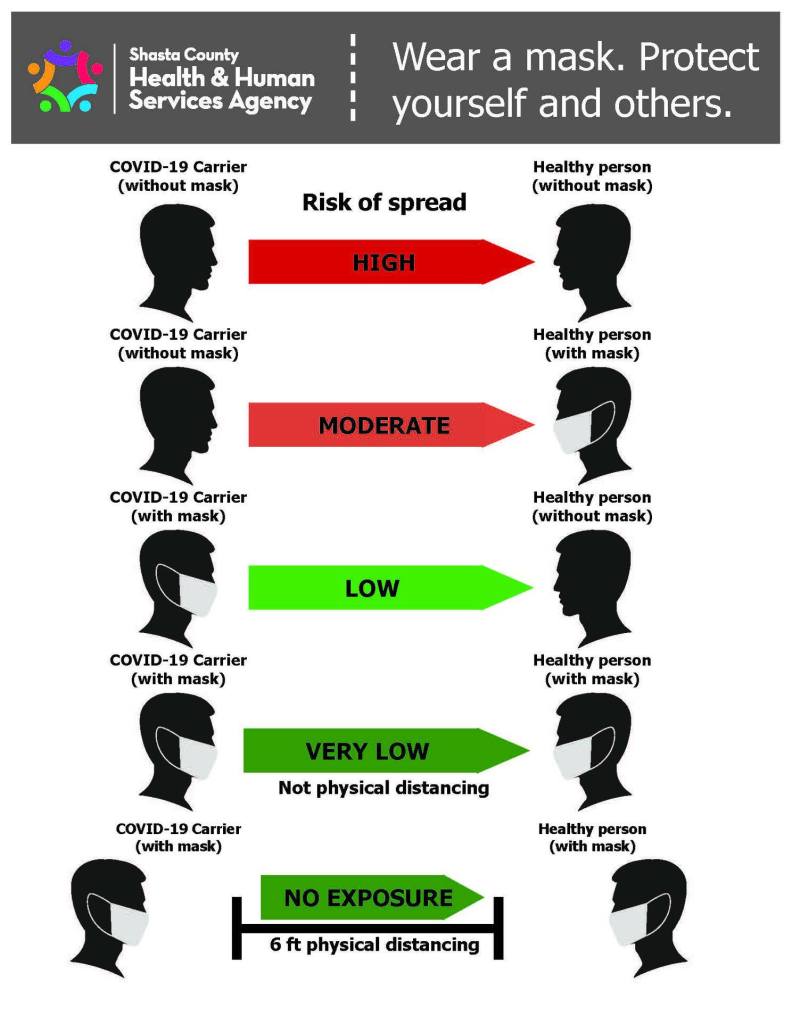
Today, the world watches as a minority of egocentric and selfish citizens insist on not wearing face masks and on defying physical distancing rules, thus prolonging the very pandemic giving rise to their madness. Each day that they ignore common sense, they risk hurting and killing more people.

In recent years, about 10,000 people/year have died from drunk driving in the United States. The drivers are considered criminals and sent to jail. Year-to-date, nearly 150,000 people have died from COVID-19 in the United States. Just yesterday, over 47,000 people became infected. All potential killers.

And some of them are marching in the streets, yelling “My body, my choice”, without masks, spreading the virus.

We need more ethical leaders.

A better tomorrow

“Culture is how we really do things around here” is the same as

“Culture is the outcome of your processes” is the same as

“Culture is the outcome of what you did yesterday and the day before.”

Thus, if we don’t change anything today, tomorrow won’t be any better.

COVID and corruption

Journalists and lawmakers are starting to investigate how certain public contracts related to COVID-19 have been awarded.

We should expect many more investigations of this kind all over the world. When billions of dollars converge on one event, whether it be the Olympics or a pandemic, there is bound to be corruption, self-dealing, and other improprieties.

With the Olympics or the World Cup, we understand the importance of augmenting corruption controls years before the event takes place. The minute the host city is announced, we can start reinforcing the compliance program and the ethical culture of our local operations before the first bid is due. With COVID-19, governments have not had time to do this. They’ve all had to rely on ordinary controls.

But here’s one thing we can prepare for: the reopening. Once the machine revs up again, and millions of customers are urging millions of companies to release goods that depend on millions of suppliers, the pressure will be on. And with pressure comes not only wrongdoing but a diminished capacity to fight wrongdoing.

On the other side of the reopening coin is the need to “ease” compliance. My friend Richard Bistrong wrote an excellent piece about it on the FCPA Blog, which I recommend you read with this one as an interesting balancing act.

We don’t really want to make things better

Yesterday I wrote about the simple rules that underlie complex systems.

Below is a simple rule to defeat COVID-19. If everyone did this for 2 weeks, the pandemic would be over.

Two. Weeks.

There are similar complex problems in our organizations today that have a simple solution. And they persist because no one is willing to suffer a little bit now and make thing better forever thereafter.

We don’t really want to make things better.

What if it were simple?

I am currently reading Systems Thinking Made Simple, which convincingly demonstrates that simplicity underlies complexity. In fact, it drives it.

Therefore, when faced with a complex problem, an important approach to finding a solution is to discover the simplicity underneath. What are the simple rules driving your compliance problem today?

Similarly, when building a compliance program, which ought to be complex, remember that it must rest on simple rules. Identify those rules at the outset. Write them down. Display them for all to see. Make sure every element of your system obeys those rules. If everyone interacting with the system understands the simple rules, they will not be overwhelmed by the complexity that emerges.

On feeling heard

As many of us work from home, some companies worry about employee performance. Employers are asking “How can I keep my team engaged?”

According to a Salesforce Research report, one of the most powerful things a manager can do is to make sure her employees feel like their voice is being heard. Employees who feel their voice is being heard are 4.6X more likely to feel empowered to perform their best work.

So now more than ever, managers should solicit feedback from employees. Ask them how you are doing as a manager, what you could do better, what worries them, and what they need to do their job. And know that you don’t always need to have an answer for everything. Sometimes, psychological air is all that is needed. And if you want helpful feedback from them, make sure you are transparent about the current situation and your future plans.


Speaking of feedback, this blog is approaching its 700-post milestone. How am I doing? What could I do better? What would help you better navigate ethics & compliance issues at work? Please let me know in the comment section below. Thank you!

Check your odds

Good poker players fold their starting hand three to four times more often than bad players. They know to wait for better cards in a better position. While they wait, they observe and accumulate information about the other players.

Likewise, good ethics officers rarely provide answers without asking many questions of their own. They resist the temptation of appearing smart based on incomplete information. They deploy modesty and seek to understand all facets of a problem. They consider the facts and the people involved before offering advice.

Providing ethical advice is betting that our prediction of the future will manifest. Let’s make sure we are placing good bets.

What is your job?

Read each question below and take at least 30 seconds to truly contemplate the answer. Don’t rush. You’ll be done in 2 minutes.

  • What does your boss think your job is?
  • What do your direct reports think your job is?
  • What do your colleagues think your job is?
  • What does your family think your job is?

My guess is that none of the answers included:

  • Get a raise
  • Get a promotion
  • Get a better office
  • Get a company car

If you do your job, you might get those. But if you work to get those, you might not be doing your job.