Making the newspaper test real

When we provide business ethics training, we tell employees to behave as if their doing would be featured on the front page of their local newspaper.

But then, when one of them is terminated for wrongdoing, we refrain from sharing the case with other employees. We invoke the fear of lawsuits, the need to negotiate a separation agreement, privacy concerns, or the distraction of having other employees discuss the matter.

These reasons are sometimes valid but they should be used exceptionally. Sharing is educating employees and protecting those who don’t recognize the pitfalls. Sharing is deterring other employees from doing the same thing. Sharing is an act of transparency that forces you to commit to be better. Sharing is an act of vulnerability that builds trust.

There is no need to use real names or locations when sharing these stories – cases can be anonymized. Of course, a few people will connect the dots. But it’s often a small price to pay in exchange for all the benefits.

Disrupting ethics and compliance

We all know what Airbnb, Uber, Zappos and others did to disrupt their industries: they attacked the worst part of the customer experience.

If ethics & compliance was an industry, and employees were the customers, what part of the customer experience should we disrupt? Here are a few ideas:

  • Long policies written in legalese that no one wants to read or can easily understand
  • Risk-based training that doesn’t help anyone to do their day-to-day tasks.
  • A lack of transparency during and after investigations
  • Double standards when imposing discipline
  • Tolerance of retaliation

This list overwhelming and yet not comprehensive. Now is the time for this young profession to realize it is heading in the wrong direction. Changing course is easier to do today than it will be tomorrow.

And it will be less disruptive.

Radical transparency

This post is the second in a series devoted to my reading notes and thoughts on the essays contained in The Culture Book, Volume 1. This essay is by the team at Buffer, a social media management platform.

Radical transparency means that we proactively default to transparency. We don’t ask “Can we be transparent about this?” Instead, we ask “What could go wrong if we are transparent about this?” Calendars, financial data, statistics, etc. are shared with all employees. And a big chunk of that is also shared with the public.

Generally, transparency builds trust, which leads to better communication and teamwork, which leads to a better work environment, happier employees, and better results. Transparency with the public can also be very good for your brand and recruiting the right people.

We share our financial data with employees and the public because we believe that the dollars we spend tell a story about what we value.

When we can’t be transparent about something, we are very transparent about why we can’t be.

Some caveats about transparency:

  • Timing is important. In some cases, the law or decency might require that we delay a disclosure.
  • Constructive criticism is best provided in private (but praise can be public).

For radical transparency to work, it has to be part of the culture:

  • Everyone needs to opt in when they join. In fact, the concept is discussed at the interview stage.
  • Once on board, everyone
    • gets a “Culture Buddy”, someone who is there to help them acclimate to the culture. Culture Buddies have weekly meeting to discuss culture challenges;
    • gets a culture guide, a living document that explains culture-related decisions made over the years;
    • is asked to set up one or two 30-minute calls with other employees to get to know each other.
  • The goal is not to assimilate newcomers into the culture. It is to learn about how the newcomers will contribute to the culture.

Culture and habits

Culture is simply an outcome of our processes.

Put another way, culture is an outcome of our habits.

Nearly 2,000 years ago, Epictetus would recommend that we break our bad habits by simply abstaining from the behavior for one day, then try for two days, and so forth until we’ve built a chain of days. And then the goal was not to break that chain.

Most leaders have a weakness that affects the culture. It could be a short temper, telling inappropriate jokes, a lack of transparency, procrastination, condescension, or worse. The way out is to resolve to correct these behaviors for one day, and then again the next day. To build a chain and then not to break it. As that chain grows stronger, so does the culture.


Hat tip to Ryan Holiday and today’s entry in The Daily Stoic.

On sharing ethical decisions

It is in the best interest of employees to do what is expected of them. Thus, whether we realize it or not, they watch our every move and word to understand what is important to their leaders. What we say about ethics and compliance and how we make decisions will impact employees’ behavior.

Rather than keeping them guessing, the ethical leader will share the decisions she has made. A great way to do this is to hold an open forum where employees can ask question about the ethical dilemmas they face. These meetings can be in person, over the phone, or via webcast. The leader will open the meeting with a story of a recent dilemma and how it was resolved, and then open it up for questions about the story or any other issue.

When done on a regular basis, these meetings send a clear message about the importance of doing the right thing. The associated transparency builds trust in the leadership and the lessons provide guidance to the employees.

Today, think of an ethical decision you made recently. Consider the best way to share that decision with your team. Then take the plunge. It may be one of the best meetings you’ve had all year.

On transparency

When I tell people that I strive to write a short blog post every day, I am often asked where I find the inspiration.

My job is such that it, alone, could be my muse. But I do rely on other sources as well. One of them is a list of bookmarks saved in a folder titled “Thought-provoking” in my web browser. From CNN.com’s homepage to Wikipedia’s “On this day…”, I often find a kernel of an idea.

One of my bookmarks is the results page of a Google search for news related to corporate culture. As a Canadian by birth, today’s top result caught my attention: “What of CBC‘s strange corporate culture?” Based on the facts made public to date, it seems that the news organization fired one of its reporters for writing a book without getting the proper approvals. The move appears harsh considering what we know about the case and the way CBC handled previous matters.

Which brings me to this post and the topic of transparency. With all the communication tools available to managers and business leaders today, I find it deplorable that most don’t take advantage of them. When they do communicate with their team, they usually stick to financial and operational matters. Once or twice a year, perhaps they’ll remind people to complete their ethics training – but they won’t share their perspective on the training itself (that would be outside their scope of work). Few are those who ever talk about culture, policies, or controls. Fewer still open up about the problems they face and how they make decisions and the actions they take to implement those decisions. If these topics were discussed openly, if employees could see how the Machine works, imagine how different the culture would be and how fewer violations would occur.

And how a journalist might still have a job.

What’s your story?

As an ethics & compliance professional, what if your day was live-streamed for all employees to see?

What if they could see you writing multiple drafts of a new conflict of interest policy, and see you push for its adoption, and see you upload it to the website?

What if they could observe the countless hours that go into creating a training module to educate the workforce on preventing corruption – writing the script, selecting the actors, verifying the translations?

What if they could listen in during your meetings with the internal audit department as you scope audits to insure that antitrust controls are effective?

What if they could see the long hours you spend reviewing thousands of emails as you try to gather facts following an anonymous complaint?

What if they could hear the debates of the disciplinary committee to ensure that everyone is treated fairly and consistently?

In that hypothetical world, assuming employee confidentiality and privacy could be protected, I believe that the corporate culture would improve. This level of transparency would foster trust.

In our real world, we can adopt a lighter version of this. We can tell our story – everyone loves a story. We can make employees feel part of that story, because they are part of that story. Storytelling is how people learn best.

Why don’t you tell your story?

United: We fly friendly*

At a family gathering last night, I explained my job this way to a distant cousin: “I help our employees answer the question ‘Should we?’ after others have answered yes to the question ‘Can we?'”

I don’t know enough about the airline industry to explain why a passenger was dragged out of a United flight yesterday. But as an Ethics & Compliance Officer and a frequent flyer, I would love to read a statement from United addressing the following questions:

“Here is why we can and should

  • Overbook our flights, and then
  • Give seating priority to our employees over paying passengers, and then
  • Use the police to forcibly remove random passengers.”

If United follows a traditional PR model, we are likely to only get answers to the question “Can we?”

But if United wants to step into the new world of transparency, authenticity, vulnerability and trust, it will also answer the much more difficult question.


From United’s shared purpose statement

The decreasing returns of doing more

The more a single person does, the less time she has to communicate to others what she is doing.

Less communication leads to confusion, conflict, frustration, disengagement, and waste. Not ideal when the goal is to do more.

For many of us, it would be wise to consider doing less and being more transparent about what we do. Transparency leads to trust, respect, integrity, and excellence – outcomes that all ethical leaders should seek to generate.

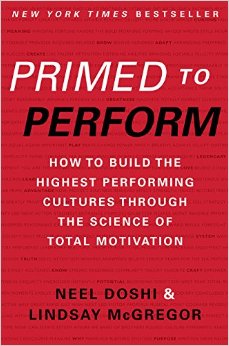
Book report: Primed to Perform – Performance calibration and Igniting a movement

51B5yNM51AL._SY344_BO1,204,203,200_

Reading notes by Yan Tougas

Performance calibration

Organizations need both tactical and adaptive performance, in the right balance.

Performance management systems usually disrupt the balance.

Ninety percent of HR executives believe that their performance management systems yield inaccurate results. That said, the absence of an evaluation system also leads to lower ToMo. Absent a formal process, assignments and promotions appear to be based on favoritism. Lack of transparency creates new forms of emotional and economic pressure.

One of the worse systems is stack ranking. It shifts motives from play and purpose to emotional pressure and economic pressure. Employees focus on what will keep them away from the bottom rather than what’s good for the company. They will reject the addition of star players to their team for fear that it will push them down on the ratings. Managers keep low performers on their team to protect high performers. Unfair review processes reduce ToMo by 33 points.

We are biased to evaluate behavior based on its outcome, not the input, even if the outcome was driven by luck. This outcome bias ensures that most performance reviews don’t do anything to improve performance. You have to think about how someone will perform going forward, not just depend on past results.

Most performance review systems prioritize tactical performance. By balancing reviews with adaptive performance measures, ToMo goes up by 28 points (which means adaptive performance will go up as well).

Unlike natural ecosystems that eventually achieve equilibrium, business culture never do. There are too many changes to the environment and too many shocks to the system. Performance calibration is what keeps the balance.

First and foremost, performance calibration must manager the career ladders.

Second, performance calibration must manage the connections between the bottom-up adaptive goals set as part of the daily rhythm and the tactical goals being communicated to parties outside of their society.

Performance calibration is positive in its intent, not punitive.

Igniting a movement

The process by which you build or rebuild your culture must itself be high ToMo. You have to lead change in ways that create play, purpose, and potential, not pressure. Fear and pressure do not make for adaptive people. We must create conditions within which other will motivate themselves. It’s never too late to change.

To build or rebuild a culture you need to create the ultimate form of human adaptability: a social movement. There are six necessary conditions for collective action to form:

Relaxed control. The dominant authority must not be willing or able to prevent collective action.

Common belief. People must share a common view of the problem and a common perspective on the solution.

Strain. People must emotionally feel the difference between their current state and their desired future state.

Conduciveness. People must have the ability to interact with one another to enable collective action.

The spark. Some kind of catalyst to trigger action.

Mobilization. Processes mobilize people within the system to act collectively, while still enabling individuality and adaptability.

To get started:

Join the community. @NeelVF @McGregorLE www.primedtoperform.com

Measure your ToMo or your team’s. http://www.vegafactor.com/survey/

Teach these concepts to your leaders.

Understand how much you are spending in time and money on culture. You can often build your culture without spending any additional money.

To follow  my implementation journey, follow me on Medium.